| |
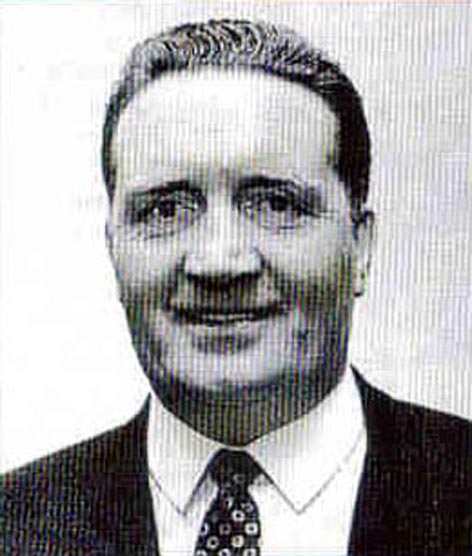
Stein: John (Jock)
1978-1978
(Manager Details)
(Manager Details)
Jock Stein was born at Burnbank in Lanarkshire on 10th October 1922. He attended Greenfield
School in Hamilton and after working for a short time in a carpet factory followed many other
locals down the pits as a miner. He joined Blantyre Victoria Junior Football club and turned
professional with Albion Rovers in 1942 but still worked as a miner apart from Saturdays. He
was soon recognised as a rugged, no-nonsense Centre-half and made over two hundred
appearances for the Coatbridge team but also had a loan period with Dundee United in 1943.
He was part of the team when Rovers won promotion to the Scottish First Division in 1948.
Stein joined Welsh Non-League club Llanelli in 1950 and became a full time professional for
the first time in his life, being paid £12 per week. He had left his wife and children
behind in Scotland and on the recommendation of Reserve team coach Jimmy Gribbens Celtic
paid £1,200 to bring him back to Scotland. Originally signed for the Reserve team, injuries
to first team players saw him given a chance in the top flight. He was appointed
vice-captain in 1952 and when captain Sean Fallon broke his arm the full captaincy was
passed to Stein. He was club captain until his Celtic playing career ended due to injury in
1956. In 1953 he captained Celtic to Coronation Cup success when they unexpectedly beat
Arsenal 1-0, Manchester United 2-1 and Hibernian 1-0 to become unofficial champions of
Britain and in 1954, he captained Celtic to their first League championship since 1938 and
their first League and Scottish Cup double since 1914. During Scotland's performances in the
1954 World Cup Finals, Jock Stein learned from the shambles of Scotland’s preparations and
also about the continentals' tactics. In 1956, Stein was forced to retire from football after
persistent ankle injuries. In total he played one hundred and forty-eight games for Celtic and
scored two goals. He was given the job of coaching the reserve and youth players and was
responsible for persuading the board to purchase Barrowfield as a training ground. In 1958,
he led the reserves to the second XI Cup with an 8-2 aggregate triumph over Rangers. This
was Stein’s first success as a Manager. On 14th March 1960 he accepted the job of manager
at Dunfermline. After only six weeks in charge, Stein led them clear of relegation. He built
Dunfermline into a powerful force and guided them to their first Scottish Cup in 1961, via a 2-0
replay victory over Celtic. In 1962 they defeated Everton in the Inter-Cities Fairs Cup and only
lost to Valencia in a third game play-off after retrieving a four goal first leg deficit. On 1 April
1964, he was appointed Manager of Hibernian and within months of becoming manager he
led them to Summer Cup success. The testimony of his contemporaries was that he was
already “miles” ahead of everyone else in his understanding of the game, and in studying how
the investment of energy could be tailored to maximum effect. Stein was immersing himself in
the structure of the game while the rest simply went out and played. On 9th March 1965, Stein
returned to Celtic as their first non-Catholic manager. Following a barren period of eight years
without a trophy for Celtic, he revitalised the team and just six weeks after becoming manager,
led Celtic to Scottish Cup success in a 3-2 victory over his old club Dunfermline. The next year
Celtic were crowned Scottish champions for the first time since 1954; they also reached the
Semi-Finals of the European Cup-Winners-Cup only to be knocked out on away goals by
Liverpool. Stein managed Celtic to a domestic treble for the first time in the club's history,
winning the Scottish League Cup, the League Championship and the Scottish Cup. He
guided Celtic to victory in the final of the 1967 European Cup against previous champions
and Italian giants Inter Milan. Despite initially falling behind to an Italian penalty his team
triumphed 2-1, winning much admiration for the positive attacking quality of their football. In
winning club football's most prestigious trophy, Stein became the first man not only to guide
a Scottish club to champions of Europe, but also the first to achieve this honour with a British
club. Celtic were also the first Northern European side to become champions of Europe. He
also became the first Manager in history to win all competitions entered. The feat was done
with a team all born within thirty miles of Glasgow. The feat of winning the Champions Cup
with a team full of native-born players was later matched by Steaua Bucharest. In a
conversation with Bill Shankly shortly afterwards, Shankly famously told him "John, you're
immortal now". The following season, Celtic won the League and League Cup for the third
season in a row. In 1969 they won another domestic treble, their second in three years. In
1970, Stein led Celtic to a League and League Cup double; they also finished runners-up
in the Scottish Cup. He also guided them to their second European Cup final, beating Leeds
United in the Semi-Finals, but they lost to Dutch side Feyenoord in the Final in Milan. He was
appointed Commander of the Order of the British Empire (CBE) in 1970. The 1970s brought
continued success on the domestic front. During this time Stein's Celtic won a record nine
consecutive Scottish Championships. Stein was badly injured in a car crash in 1975. He
nearly died but eventually recovered . For most of the 1975/76 season Sean Fallon assumed
control as Manager. Stein returned to the managership at the start of the 1976/77 season.
Celtic's fortunes at this point went into decline and Stein was persuaded to stand down to
make way for a younger man. In 1978 with Billy McNeill's appointment as Manager, Stein
was not offered a seat on the Celtic board, but was offered a position with responsibility for
the Celtic Pools. Stein rejected this offer as he felt he still had something to offer football and
left Celtic in less than amicable circumstances. Shortly afterwards he became manager of
Leeds United after just one game in the 1978/79 season. He had been a long time friend
and adversary of Don Revie and the big man in physique and football stature but, after just
forty-four days in charge at Elland Road, Stein resigned, accepting the position of Manager
of the Scotland National team. His reign did not get off to a good start losing 2-3 to
Manchester United at Elland Road, but using just players he had inherited from Jimmy
Armfield or John Hawley who caretaker Manager Maurice Lindley had been purchased in
the closed season, his second game in charge saw an emphatic 3-0 win over
Wolverhampton Wanderers at Elland Road. Then sandwiched between two goalless draws
with West Bromwich Albion at the Hawthorns and at Elland Road in the League Cup, came
another 3-0 triumph over this time against Chelsea at Stamford Bridge. A 0-3 loss to
Manchester City at Maine Road, an unexpected 1-2 reversal to Tottenham Hotspur at
Elland Road and a goalless draw at Coventry City preceeded another 3-0 victory over
Birmingham City at Elland Road. His final game in charge saw United surmount the West
Bromwich Albion hurdle in the League Cup with a Paul Hart goal at the neutral venue of
Maine Road. He left Leeds in midtable and fans wondering of what might have been. Stein,
who had been part-time National Manager in 1965, was now able to focus on the job
full-time. He led Scotland to the 1982 World Cup, where they went out on goal difference to
the Soviet Union. During qualification for the 1986 World Cup, Stein brought in a young Alex
Ferguson, at the time Manager at Aberdeen, to be his assistant. On 10th September 1985,
Jock Stein died from a heart attack at the end of the 1-1 draw with Wales at Ninian Park.
He was sixty-two years old. The result in this game virtually ensured Scotland's qualification
for the 1986 World Cup, where Scotland were managed by Alex Ferguson until the surprise
appointment of Andy Roxburgh. Stein was regarded as one of the great quartet of Scottish
Football Managers, along with Bill Shankly, Sir Alex Ferguson and Sir Matt Busby and has
been voted the greatest Scottish Football Manager. During his career as a Manager he
won the European Cup, eleven Scottish League Championships, eleven Scottish Cups
and six Scottish League Cups.
| Competition | Played | Won | Drawn | Lost | For | Against |
| League | 7 | 3 | 1 | 3 | 12 | 8 |
| League Cup | 3 | 1 | 2 | 0 | 1 | 0 |
| Total | 10 | 4 | 3 | 3 | 13 | 8 |
Tributes and Obituaries
Undiscovered Scotland: Biography
John "Jock" Stein, CBE, lived from 5th October 1922 to 10th September 1985. He was a football manager best remembered as manager of Celtic and of the Scotland national team. The wider picture in Scotland at the time is set out in our
Historical Timeline.
Jock Stein was born at Burnbank near Hamilton in South Lanarkshire. In 1937 he left school at 15 to work in a carpet factory before going down the pits as a miner. In 1938 he joined Blantyre Victoria junior football club, becoming a semi-professional
player in 1942 with Albion Rovers while still working as a miner. Albion Rovers gained promotion to the First Division in 1948, and in 1950 Stein became a full time professional, on £12 per week, with Welsh club A.F.C. Llanelli. In 1951 Celtic bought
him for £1,200. He became club captain the following year and continued to play with Celtic until 1956. When he retired he had played 148 games for Celtic and scored 2 goals. During his time as captain, Celtic had won the Coronation Cup in 1953,
and the League Championship and Scottish Cup double in 1954.
Stein moved on to become reserve and youth team coach for Celtic. In March 1960 he accepted the job of manager at Dunfermline, helping them escape relegation that season. The following year Dunfermline won the Scottish Cup. In April 1964, he
became manager of Hibernian, and in March 1965, Stein returned to Celtic as the team's first non-Catholic manager. The team had not won a trophy of any sort for eight years, but six weeks after his arrival they won the Scottish Cup. The following
season they became Scottish League Champions for the first time since 1954, and reached the semi-finals of the European Cup-Winners-Cup.
The following season Stein guided Celtic to the Scottish domestic treble of the Scottish League Cup, the League Championship and the Scottish Cup. And in 1967, Celtic won the European Cup beating Inter Milan in the final. For the next decade,
Celtic reigned supreme in Scottish football, and Stein led them to 9 successive League Championships. He was awarded a CBE in 1970. In 1975 he was seriously injured in a car crash. He left Celtic in 1978, spending a brief period as manager of
Leeds United before becoming Scotland manager.
Stein led Scotland's campaign in the 1982 World Cup, where they went out at the group stage on goal difference to the Soviet Union. During qualifications for the 1986 World Cup, Stein brought in a young Alex Ferguson, at the time manager at
Aberdeen, to be his assistant. On 10 September 1985, Jock Stein died from a heart attack at the end of the 1-1 draw with Wales at Ninian Park in Cardiff. He was 62 years old.
Jock Stein: The Famous People: Biography: 10th November 2017
Jock Stein was a Scottish football player and manager and became the first ever manager of a British side (Celtic) to win the European Cup in 1967.
Quick Facts
Birthday: October 5, 1922
Nationality: Scottish
Famous: Coaches Football Players
Also Known As: John 'Jock' Stein
Sun Sign: Libra
Died At Age: 62
Born in: Burnbank, South Lanarkshire, Scotland
Famous as: Football Manager
Spouse/Ex-: Jean
children: Ray
Died on: September 10, 1985
place of death: Cardiff, Wales
The first ever manager of a British side to win the European Cup, John Stein was a footballer and manager of Scottish origins. Popularly known as Jock, he enjoyed tremendous respect and success over the 13 years he managed the football team -
Celtic. He not only guided them to a European Cup win, but also led them to nine successive Scottish League championships. Stein was a high school dropout whose first job experience was as a carpet factory worker. He then moved on to work in
coal mines though he found this job highly unsatisfactory. Since he loved playing football he decided to try to pursue a career in this direction. He started playing football while continuing to work in the mines—being a coal mine worker exempted him
from compulsory conscription during the World War II and gave the young man ample time to pursue his passion of playing. Initially he used to play football with Llanelli Town and Celtic before ankle injuries forced him to retire from active playing. Slightly
disappointed, but not disheartened, he embarked on a managerial career. He returned to Celtic as a manager after a brief stint at other football clubs. After serving the team for 13 years, he went on to manage the Scottish National Side.
Childhood & Early Life
Jock Stein was born in South Lanarkshire. He attended school till 1937 before dropping out to work in a carpet factory. He found work in a coal mine while still young. Around this time he also began playing football and joined Blantyre Victoria junior
football club, gradually becoming a semi-professional player by 1942. He kept his job as a coal miner during the World War II to escape enlisting. He devoted his leisure time to his favourite sport, football.
Career
He became a full-time professional football player in 1950 and signed a contract for £12 per week with the football club Llanelli. The team applied to join the Football League but was rejected. Upset, Stein decided to become a miner again but fate
had other plans.
Celtic bought him for £1,200 in December 1951. Initially he was signed as a reserve but was soon made a member of the main team. He played so well that he was promoted to the vice-captain within a year. The captaincy was passed on to him
when the regular captain broke his arm.
Celtic was invited to play in the pan-British Coronation Cup tournament in 1952-53. The team beat Arsenal, Manchester United, and Hibernian to win the trophy.
The following year, Stein was made the captain of the side and he led them to win a League and Scottish Cup Double. The club rewarded the players by paying for their trip to attend the 1954 FIFA World Cup.
He was internationally recognized in 1954 when he was selected for the Scottish Football League XI. The team finished second in 1954-55 and lost the final in the Scottish Cup to Clyde.
Stein began to suffer from persistent ankle injuries which threatened his playing career. After undergoing various painful treatments and surgery, he officially retired in 1957.
He began coaching the Celtic Reserve team in 1957. Players like Billy McNeill, Bobby Murdoch and John Clark were among the ones he coached. Under his coaching, his team won the Reserve Cup.
He was appointed the manager of Dunfermline in 1960. The team which was going through a losing streak before Stein joined began to win matches under him. He made the team a powerful force to reckon with and led them to a victory in the
Scottish Cup in 1961.
Dunfermline progressed to the quarter-final of the 1961-62 European Cup Winners’ Cup but finished in the fourth place. In March 1964 Stein left the team.
He became the manager of Hibernian after leaving Dunfermline in 1964. The team was struggling when he took the reigns. He actively participated in practice sessions and encouraged his players to give it their best. A remarkable difference came
in the team after Stein joined. He led them to a victory in the Summer Cup.
He quit Hibs and returned to the Celtic in March 1965 as their manager. He took over the struggling team and guided them to Scottish Cup win.
He signed Joe McBride from Motherwell to the Celtic for the 1965-66 season. This turned out to be a wise move as the player scored 43 goals that season. Celtic won the League Cup Final against Rangers and reached the semi-finals of the UEFA
Cup Winners’ Cup.
He achieved his career high point in 1967 when he guided the Celtic to triumph in the European Cup Final against previous champions, Italian Giants Inter Milan.
The team had a great season in 1967-68 as well as they won the League and League Cup. Again they achieved the League and League Cup double in 1970.
The Celtic had a great run throughout the 1970s as they completed a record of nine consecutive Scottish league championships. Stein had to take a break from his duties due to an accident though he rejoined as a manager in 1976-77.
In 1978 he was appointed the manager of Leeds United. However he resigned from this post after only 44 days.
He became the manager of Scotland on his 56th birthday. Several thousands attended his first game in charge against Norway. He guided the team to the FIFA World Cup in 1982 where they were eliminated in the group stage.
Achievements
He is best remembered for his role as the manager of the football franchise, Celtic, which he led to a European Cup victory in 1967, thus becoming the first manager of a British side to win the prestigious cup.
Personal Life & Legacy
He married Jeanie McAuley in 1946. The couple had two children.
Stein had a heart attack and died in 1985.
He was posthumously inducted into the Scottish Sports Hall of Fame and the Scottish Football Hall of Fame.
Daily Mail: 10th September 2010: Brian Scott: JOCK STEIN: Sportsmail’s Brian Scott, on duty that fateful evening 25 years ago, recalls the shock and sorrow at a legend’s passing
Two words from a tearful Graeme Souness - 'He's gone' - prompted the outpouring of thousands more by us scribes who were on duty that fateful night of September 10, 1985, in Cardiff. Jock Stein was dead.
His Scotland side had just drawn 1-1 with Wales to assure themselves of a play-off with Australia - one they would negotiate successfully - for a place at the World Cup in Mexico the following summer.
But what should have been a heady occasion for Stein and his players became a harrowing one with the news that the manager's life had ended in his, and their, moment of triumph.
We'd last seen him at the end of a drama-laden match being assisted from the bench.
Intolerable pressure: Stein had not been his usual self in the build-up to or during the game at Ninian Park
A million or so television viewers back home had witnessed the same distressing image. Even so, none of us could have imagined this legendary character was in his death throes; soon to be the subject of obituaries appearing around the world.
The immediate reaction to his passing was one of shock coupled with incomprehension. What ... the most imposing figure in Scottish football no longer is of this world? Please, someone, say it isn't so.
Then a feeling of profound sadness for him and his family set in. It has lingered all the way through to the present, with today (Friday) marking the 25th anniversary of the great man's demise at the age of just 62.
Tuesday's European Championship tie against Liechtenstein at Hampden - we won't linger here on how wretchedly Scotland were to perform before winning 2-1 - was preceded by a minute's rousing round of applause for Stein.
Parkhead fans, who still live in awe of his unparalleled achievements while manager of Celtic, will accord him the same again before tomorrow's home game with Hearts.
Rarely can that sorrowful, and somewhat trite, sentiment applied to the deceased - 'gone but not forgotten' - have carried greater resonance than in his case.
Stein, big and burly, dominated the Scottish game for a generation. He imbued it with pride when Celtic won the European Cup in 1967.
He offered it wise counsel. Be sure he would have much to say if he could see the state the game is in at the moment.
The national team had qualified for the World Cup Finals of 1974 and 1978 when, after his brief sojourn with Leeds United, he took charge of them in succession to Ally MacLeod.
He duly prolonged the sequence by taking Scotland to Spain in 1982 and was bent on stretching it still further when the omens began to gang up on him and them.
Scotland 0, Wales 1. That unforeseen setback at Hampden in March, 1985, looked as if it could undermine their chance of qualifying for Mexico. It also took its toll of Stein.
He became unwell, with hindsight suggesting he might have suffered a mild heart attack in the aftermath. But when, in May, Scotland won 1-0 in Iceland, with a Jim Bett goal, he and they recovered a sense of optimism.
The return match with the Welsh at Ninian Park four months later was to be crucial. If Scotland won, they would progress to the Finals; if they drew, they would line themselves up for a play-off.
Not since they'd faced the same opponents in a climactic World Cup qualifier eight years earlier - one which Wales, in their questionable wisdom, shifted to Anfield - had such tension gripped the nation.
Stein was relaxed enough in the immediate build-up; at least he contrived to give that impression. Yet some of those close to him thought they sensed something eerily strange in his demeanour.
The night before the game, for example, he called his assistant, Alex Ferguson, and coach Andy Roxburgh to his room for a blether.
Now, he wasn't a man given to talking about himself. Yet, for once, he did; running through the whole gamut of his career in football.
His two aides, when they left him, looked at one another in bemusement, saying: 'What was that all about?'
This pair, in time, may have found themselves wondering if Stein's life had passed before his very eyes that evening. Had he had a premonition of what was to befall him some 24 hours later?
It was odd, too, that the manager had discouraged any of his family from going to Ninian Park.
His son, George, was set to travel all the way from Switzerland, where he lived, only to be dissuaded from doing so.
But to the match itself; one in which Scotland could well have done without being deprived of their suspended captain, Souness, for whom a seat in the stand was set aside.
Stein's team assuredly would have been the stronger, too, had not Kenny Dalglish, Alan Hansen and Mo Johnston all been rendered unavailable because of injury.
But to lament their absences in public was to run the risk of allowing negativity to intrude upon the Scots' best-laid plans. Hence, the manager's every utterance beforehand was positive.
Wales, in the event, looked the better side for most of the 90 nerve-shredding minutes, taking the lead early on through Mark Hughes when he beat Jim Leighton with a solid shot from just inside the penalty box. Could Scotland possibly find a way back?
Stein, perceived as supreme among strategists, would plot one, surely. Yet, in the half-time dressing room, he seemed strangely reticent and detached.
He could only have been further disoriented by the fact Leighton had lost one of his contact lenses. So Alan Rough was pressed into service as a substitute and, with the second half yielding no early promise of an equaliser, the talismanic Davie
Cooper came on, also.
This latter switch proved to be crucial when, in the 80th minute, the Scots were awarded a dubious penalty. Cooper, his courage somehow withstanding the intense pressure upon him, despatched the kick past Neville Southall's grasping hands.
Scottish fans comprising roughly half of the 44,000 crowd were uplifted in that moment. So, too, were those occupying the Scottish bench.
'Keep your dignity,' Stein kept cautioning them in anticipation of his team hanging on for a draw.
Photographers crowded in on the dugout, hoping to get the picture which may betray the manager's innermost emotions.
He shooed them away but one wouldn't budge, angering Stein who motioned to push him aside.
Then, with the final whistle about to blow, he seemed to slump and required to be helped down the tunnel. What ailed him? Scotland's celebrations became muted as that question awaited an answer.
SFA secretary, Ernie Walker, had left his seat in the directors' box shortly after Cooper's equaliser. He couldn't bear to watch the remainder of the game.
Nor could Souness. The pair met within the bowels of the stadium and retreated to a hospitality area to steady their nerves. Then they became aware of the unfolding drama involving Stein, who had been rushed to a medical room.
Walker hastened to the stricken manager's side, in time to hear him say something like: 'It's all right.'
But, with Scotland's doctor, Stewart Hillis, having administered what treatment he could, Stein's pulse stopped.
Only much later did it emerge that the manager, victim of a cardiac scare in the early 1970s, hadn't taken his diuretic pills that day. He had succumbed to a build-up of fluid in his lungs, rather than a heart attack.
Scotland 's dressing room was desolate, its occupants numbed by what they'd heard from along the corridor.
None could bring themselves to speak for about 20 minutes. Then a clearly-distressed Souness appeared where the Press were gathered to utter those unforgettably moving words which none of us was quite ready to take in.
'He's gone,' the captain muttered. We'd almost interpreted as much from the grave look on the face of SFA president, David Will, who'd passed by moments earlier, despite our reluctance to believe it.
Even the stars above couldn't brighten Scotland's charter flight back to Edinburgh.
Doc Hillis came to the rear of the plane to brief the Press on Stein's final minutes. Virtual silence prevailed otherwise, save for the wails let out by a close friend of the Stein family who was beside himself with grief.
We reporters sat with sunken heads, scribbling our final testaments for the night to a famous life lost.
Then, having filed them from a bank of telephones at Edinburgh Airport, and as we headed past the luggage carousel towards the exit, a baggage handler held up a shoulder bag asking if it belonged to any of us.
'No,' we said, 'but if you would allow us to look inside, we might be able to identify whose it is.'
Several of the contents, including a book and a bottle of pills, could have belonged to anyone.
But what's this? A letter addressed to Mr. J. Stein: a most poignant reminder that the bag's owner hadn't come home.
Stein, Jock: Celic Wiki. Biography and Achievements
Personal Details
Fullname: John Stein CBE aka: Big Jock, Jock Stein
Born: 5 October 1922
Died: 10 September 1985
Birthplace: 339 Glasgow Road, Burnbank, Lanarkshire (Scotland)
Signed (player): 4 Dec 1951
Left (player): 29 Jan 1957 (retired)
Position: Centre-half
Debut: Celtic 2-1 St Mirren, League, 8 Dec 1951
Internationals (player): Scotland; Scottish League
International Caps: 0; 1
International Goals: 0; 0
Coach (reserves): 1957 - 13 Mar 1960
Manager: 9 Mar 1965 - 28 May 1978
Succeeding: Jimmy McGrory
Successor: Billy McNeill
Scotland Manager: 13 May 1965-7 Dec 1965 (interim); 4 Oct 1978-10 Sep 1985
Summary
Jock Stein is one of the most notable managers in British football history, and in our opinion the greatest manager who ever lived. He is best known for his time as manager of Celtic and for managing the Scottish national football team, but his impact
was far greater than just on the pitch and stretches into social and community issues that surround the history of Scotland.
He is regarded as the greatest out of the legendary quartet of Scottish football managers (i.e. Jock Stein, Bill Shankly, Sir Matt Busby and Sir Alex Ferguson) and has been voted the greatest Scottish football manager reflecting this.
Born in Burnbank, South Lanarkshire (Scotland), Jock Stein knew football would be his escape from the Lanarkshire coal mines. In 1937 he left Greenfield school in Hamilton and after a short time working in a carpet factory and went down the pits to
become a miner. The next year he joined Blantyre Victoria junior football club. He started out as a professional player with Albion Rovers in 1942 and continued to work as a miner during the week, while playing as centre-half on Saturday. He made a
name for himself as a no nonsense centre-half and went on to make over 200 appearances for the Coatbridge club, which also included a brief loan spell to Dundee United in 1943. Rovers won promotion to the First Division in 1948.
In 1950 Stein signed for non-league Welsh club Llanelli Town. For the first time in his career, he became a full-time professional footballer on the sum of £12 per week. Sadly, he was soon desperate to return to Scotland as he had left his wife and young
daughter behind and his house had been broken into twice in his absence. His wish was granted in 1951, when on the recommendation of Celtic reserve team trainer Jimmy Gribben, Celtic bought him for £1,200.
He was signed as a reserve but injuries incurred by first team players resulted in him being elevated to the first team. In 1952 he was appointed vice-captain and when captain Sean Fallon broke his arm the full captaincy was passed to Stein. He would
be club captain until his Celtic playing career ended due to injury in 1956.
In 1953 he captained Celtic to Coronation Cup success when they unexpectedly beat Arsenal 1-0, Manchester United 2-1 and Hibernian 1-0 to become unofficial champions of Britain and in 1954, he captained Celtic to their first League championship
since 1938 and first League & Scottish Cup double since 1914. In light of the drought in the many years previously, this was quite unprecedented, and Stein had more than played his part in this success.
His emergence into the side was pivotal for the club. Without his input that led to winning honours, the club's trophy famine would have been longer and an unbearable barren spell the records of our long history. He helped to galvanise the side and his
tenure at the club saw the team to push for honours which otherwise would have been outwith of our grasp. As a measure of his importance, from the year after his departure from the club as a player, Celtic did not win another trophy until ironically Jock
returned back as manager in 1965.
Jimmy McGrory's record as manager was shored up due to the purple patch of form at the time of Jock Stein's place in the first team. He was a great player and the supporters loved him. Some commentators even attribute the brief good spell of
honours in the 1950s down to Stein alone and not even to McGrory. A harsh opinion on the manager, but there is much truth to it when you look at the bare facts in the role of honours. Jock was the bedrock of the side.
Already, he was becoming a great student of the game. During Scotland's performances in the 1954 World Cup Finals, Jock Stein watched and learned from others: firstly, about the shambles of Scotland’s preparations and secondly about continental
tactics, particularly the Hungarians who were revolutionising the game. It was to leave a lasting impression on him. John Hogan who was instrumental to the Hungarian system was a coach at Celtic but was poorly utilised by the players at the club. Jock
is likely to have learnt from that experience from those who served under Hogan, and he learnt that management must enforce itself and not expect the players to work for success alone.
In 1956, Stein was forced to retire from football after persistent ankle injuries. He retired formally in Jan 1957, as an ankle injury in a league cup against Rangers led to the end of his playing career, and he wore the hoops for the last time against
Coleraine in a close season match in 1956. Sadly it meant that he missed out on the magnificent 7-1 victory over Rangers in the League Cup final later that year.
In total he played 148 games for Celtic and scored just 2 goals (a stout defender). If anyone questions the impact that the club had on him emotionally, then you only need to read his own words when he said at a supporters' night that:
“Unlike many other Celts, I cannot claim that Celtic was my first love… but I can say that it will be my last love.”
After retiring from play, he was given the role of coaching the reserve and youth players and was responsible for persuading the board to purchase Barrowfield as a training ground. In 1958, he led the reserves to the Second XI Cup with an 8-2
aggregate triumph over Rangers. This was Stein’s first success as a manager. It was embarrassing that whilst the reserves were succeeding, the senior side were failing repeatedly. The reserves were better coached and managed, yet the board and
senior side were paying little attention to this, and it was to be our loss when he decided to move on.
His time at Celtic as a player was to have a profound impact on Jock, but it wasn't just all football related for Jock, his life at Celtic was to be more than just a sum of the games he played for us. Jock's life changed forever as there were deep social
repercussions from his move. On joining Celtic, his long-time 'best friend' walked out of his house and life forever due to his choice of a new club (being Celtic). Others followed his 'friend'. "Maybe they weren't friends really," he said in a later reflection.
His father was said to be so disgusted that he couldn't even utter our club's name and never wished him good luck or the best prior for a match. This unhealthy environment was set to ingrain a deep seated hatred of sectarianism and fuel his personal
crusade against bigotry.
It is fair to say that he will have experienced bigotry from both sides (once even challenging Charlie Tully in an after-match bath after Tully jokingly questioned the number of non-Catholics in the Celtic side), but he was never one to take part in the banter
but rather challenge it. It was to have an impact on him that was to fuel his motivation to succeed against all obstacles for the rest of his life in whatever challenge he was to face or take on.
Playing Career
APPEARANCES LEAGUE SCOTTISH CUP LEAGUE CUP EUROPE TOTAL
1951-57 106 21 20 - 147
Goals 2 0 0 - 2
Honours with Celtic as a player
Coronation Cup 1953
Scottish League 1953-54
Scottish Cup 1954
Manager 1965 - 1978
On 14 March, 1960 he accepted the job of manager at Dunfermline. After only 6 weeks in charge, Stein led them clear of relegation. He built Dunfermline into a powerful force and guided them to their first Scottish Cup in 1961, ironically via a 2-0 replay
victory over Celtic. In 1962 they defeated Everton in the Inter-Cities Fairs Cup and only lost to Valencia in a third game play-off after retrieving a four goal first leg deficit.
On 1 April, 1964, he was appointed manager of Hibernian and within months of becoming manager he led them to Summer Cup success. The testimony of his contemporaries was that he was already “miles” ahead of everyone else in his
understanding of the game, and in studying how the investment of energy could be tailored to maximum effect. Stein was immersing himself in the structure of the game while the rest simply went out and played.
On 9 March, 1965, Stein returned to Celtic as their first non-Catholic manager. It was an offer he could not refuse as it may not have come again.
It's hard to know where to begin on Jock's reign at Celtic. It could have been so different, and he might have chosen to rather stay at Hibs where he was the newly appointed manager, but his heart lay at Celtic. Unfinished business or he moved in
respect to Sir Bob Kelly, Jock Stein was our new manager and everyone knew that things were to change. Celtic had upto this point only had three other managers in its whole history, so Stein likely saw this chance as a once in a lifetime opportunity.
Jock was blessed with some great talent on taking over. McNeill, Jinky, Murdoch et al were already there but their morale was rock bottom. Many even were on the verge of leaving the club. If he had come even just a short while later, who knows what
we could have missed.
However, the first thing to challenge was the stalemates at the club. The previous incumbent (Jimmy McGrory) had acquiesced too easily to the board and let control slip through his fingers. The team was a shambles and a poor reflection of its glorious
past. McGrory was there to take the flak for the failings and yet had no real control of any of the matters. Stein’s first great victory was to force the hand of the board to ensure he was to be the sole man in charge (and NOT then chairman Bob Kelly). That
required good early results, and success came early.
The Scottish Cup final of 1965 was pivotal, and victory over Dunfermline (favourites for the final) helped to cement Jock Stein’s position and control against the board's interventions. The victory came following a barren period of 8 years without a trophy
for Celtic. He commented that how things could have been so different if we had not won that. It gave Jock the justification for the right to manage as he freely wished to without any interference.
The next season Celtic were crowned Scottish league champions for the first time since 1954; they also reached the semi-finals of the European Cup-Winners-Cup only to be knocked out on away goals by Liverpool. It was a taste of greater glories to
come, and had shown just how far he had turned the club around. Bad refereeing caused Celtic to lose out on making it to the ECWC final and possibly winning it, however lessons were learnt and it was to be repaid in spades in time to come.
We'd begun our reign of domestic dominance, we were to monopolise the league cup for the next 5 years and the league was to be ours for an incredible nine seasons in a row. Not even the most optimistic could have believed this possible only a few
years back.
So how did he manage such a quick turnaround? The basis for the success from this great start was that from the beginning he was quite revolutionary for the staid world of Scottish football, bringing in a fresh approach. Firstly, unlike the old gentlemanly
style of management of McStay and McGrory, Jock Stein preferred to actually mix with the players at training and not be a bystander. He was a tracksuit manager and introduced the football into training. Surprising as that last point seems, most training
in those days for whatever reason did not involve practise with football. He introduced also specialised coaching for goalkeepers, previously seen as periphery.
In matches, he was not afraid to let the players express their abilities more and encouraged defenders to push forward and attack. He used to sit at various games starting with a notepad and pen and map out the lines some players ran in the whole
game. Nowadays it’s all automated but he was doing starting modern analysis ahead of the times. This made him a seminal manager for the game both at home and abroad.
He helped to push the boundaries of the game (tactically), but his emphasis was always good football, and with players like Jinky & Murdoch in his squad it was a smooth task, but Stein was the catalyst for those players and they’ve always stated their
debt to the great man. Jock Stein was never afraid to show who was in charge and the famous hair-dryer method of team talks was much exercised. Billy McNeill recalled that after one argument with Jock Stein after a game that he went for a bath. The
next thing Jock Stein came storming in and jumped right into the bath (fully suited) and continued the argument. Billy McNeill knew then (if not even before) who was in charge and not to be crossed. Any critics of his man management style must realise
that Celtic had had gentlemanly management and coaching under Jimmy McGrory and the legendary John Hogan, all to no avail. The players had to be reined in and Jock having experienced the soft method of man management, he knew that wasn't
the right way.
People shouldn't get the impression that he was overly harsh. Players can be just big kids and they can need a stern father figure. Jock was a hard task master but he very much had a sense of humour. He loved to entertain by singing and could have a
laugh with all. Quick witted and intelligent (see quotes) he was a joy for anyone to be around to listen to. To put anyone in their place he would never shirk from using his wit to cut them down to size. He was fatherly to the players which could mean tough
love and that was what the method he employed most with his players and staff. Having experienced under achievement with Celtic in the 1950's, which saw many very talented players take personal advantage of the system to the detriment of the club
(e.g. Charlie Tully), he did not want this repeated. He wanted to achieve with his players what he could not himself as a player. The players all refer to him in retrospective interviews as a father figure, and that is the greatest compliment they can pay to
the man on a personal scale. He took the players to his heart and they respected him for it. When you have young scamps in your side like Gemmell & Jinky, then a tough (and patient) father is very much needed; their antics were enough to drive
anyone insane.
The foundations were laid and we had begun possibly the greatest golden period for any club in football's history. Nine league titles in a row with many cup wins (and other final victory appearances). The team was led by Billy McNeill on the pitch, and
the prime players were Murdoch (marshalling play in the midfield), Lennox slotting in the goals and Jinky dazzling the opposition with his skills. It was a great time to be a Celt and Jock Stein commandeered them both on and off the pitch, pushing them
to reach the best of their abilities.
Season 1966-67 was the pinnacle of his career and that of his charges. Under his direction, Celtic swept up everything that they entered in that season, domestically and in Europe. Celtic were to become the European Cup winners and crowned the
finest team on the continent, but it wasn't just the victory. It was the manner of victory. Celtic were the first non-latin side to win the European Cup and had broken down the rise of the Catennacio system of football tactics (under the difficult and at times
reprehensible Helenio Herrera (Inter Milan manager)) but more importantly Celtic had played and won the game in the way it was meant to be played. Jock Stein had sent the players out in an aggressive 4-2-4 attacking system and play in their best
way. He had matched his counterpart in the psychological stakes, and he players did not let him down. His pride was boundless: "We must play as if there are no more games, no more tomorrows...".
Liverpool manager Bill Shankley summed it beautifully at the final whistle to Jock: "Jock, you're immortal now!". Those words are the most oft-repeated on any reflection on Jock Stein's life.
Celtic were the first team to sweep all in front of them, and others may have matched it since but never as great as he had done so. Our squad was all home-grown, and under his management and skill he had led them to levels that no one could ever
have believed. Many managers & top coaches have cited his achievements that season as being influential (e.g. Brian Clough, Matt Busby, Alex Ferguson), and it is a measure of his stature that he is held aloft by Alex Ferguson as the greatest ever.
Jock Stein was a forward thinker and at the same time as he led the first team to the European Cup final in 1967, he had already begun to rear a young and upcoming set of players who were to lead us onto further glory. The Quality Street Gang of
players is possibly one of the greatest set of young players ever to have to grown up together, including Kenny Dalglish, Danny McGrain, Lou Macari and Davie Hay. The most fetted was the mercurial George Connelly. With these players, Jock Stein
showed his wealth of talents in producing and procuring players.
Every one of those players (even those who never reached the top) has praised Jock Stein and their debt to him for their development. With them the support experienced some great entertainment, sublime football and further League, Cup &
European success.
However, the Quality Street Gang also showed the strain for Jock Stein. As much as Jock was very much a moderniser and dragged not only Celtic but Scottish Football as well into the modern age (for tactics, training and preparation etc) there were
other changes in the game that Jock Stein found hard to deal with. Celtic was poorly managed by the board and they squandered our opportunities to build up a golden financial nest egg to invest in facilities and players. Due to the greater rewards
possible in England, the club lost too many good players rather than being able to hold onto them to build upon what what was there. Amongst others, Davie Hay, Lou Macari and Kenny Dalglish were lost for financial reasons. Jock Stein was from an
era where community and achievement was paramount, and you remained loyal to your seniors. Times were changing, and with little support from the board, he was at a loss to handle the financial side to help keep the Quality Street Gang players at
bay. Jock wasn't actually averse to using financial rewards as an incentive for players but he didn't have the resources to match what the richer clubs down south could. This was a time when managers were far more burdened with responsibilities
unlike today's where much has been delegated to specialists.
Jock Stein - Kerrydale Street
For Jock, it was painful to see his project cut apart, but most painful was George Connelly. Most feted by Jock Stein, he was a seminal talent of which there have been few equals. One commentator on seeing Jock Stein with George Connelly at an
awards dinner remarked, that it was like seeing a proud father with his son. However, George Connelly had his personal demons and this led him astray going AWOL on various occasions before simply having to escape Celtic altogether. It is a
measure of Jock Stein's character that whilst others murmured behind his back, Jock Stein actually spent much time with George to help him and even went personally to his home family in Fife to assist. It was to be with no success. Archie MacPherson
claimed in his biography on Jock Stein that Jock's inability to handle the events surrounding Connelly was his biggest failure. It was a sore loss for Jock as he saw his players to be as like as his family. MacPherson also quite rightly points out the father-
son relationship Jock had with other players too, in particular Jimmy Johnstone and Kenny Dalglish. The strain must have been great around 1975 coping with the increasing number of off-field 'antics' of Jimmy Johnstone, the absences of George
Connelly and the strong will of Kenny Dalglish seeking a transfer.
Despite the difficulties, we were still in our ascendency and there was a genuine fear and respect for our club. Rangers in particular were suffering. Despite some success in Europe and the odd cup win, Jock Stein's shadow lingered large over them.
One German journalist remarked that it was Celtic who beat them in the ECWC final in 1967. Jock despised Rangers passionately for what they stood for, and most of the players remarked just how much satisfaction he would take from a victory over
them. It was never something he hid, taunting them and their sycophants in the press whenever he could. He hated their bigoted ethos and used his wit to cut them down with it. What hurt Rangers' fans the most was that Jock Stein had actually grown up
as a Rangers fan as a child, and to see him lead Celtic to the peak of the game was humiliating. There were stories abounded in the early days of his reign that Jock was approached to come to Rangers and become their manager, but that was never
to happen. Jock loved Celtic and hated Rangers. There was no choice for him. We respected him even more for it.
His position on Rangers had a further impact on our support. Jock practised what he taught and he followed the mantra of decency, respect and tolerance for all. He challenged all those who didn't follow, and there was no one who more represented
that than Rangers. It was an element of his character that out of respect the support followed him on.
Jock once humoured in an interview that his family were Orange but not staunch, and he was to show to others that tolerance and mutual respect were necessities to be a good person. It's getting harder to envision now, but back then and before,
bigotry was so entwined in Scottish society that it was treated by some as a merit on their own character to be bigotted (as at Rangers). A pathetic state of affairs but Jock was above this. He saw decency and humanity at Celtic where he was to sow
his roots and it was to be this character that was to imprint an indelible mark on the history of the club. No Celtic supporter has been left untouched by his good deeds.
Possibly, one of his most famous actions came in August 1972 when in a game between Celtic and Stirling, Jock stormed into the Celtic end on the terraces during a match and confronted a Celtic supporter. He chastised the man for what he was
belting out, lambasting him in no uncertain terms. As Jock later put it himself: “The wreckers are chanting about things that have nothing to do with football”. Whilst others like to take the moral high ground from afar, Jock Stein took a stand toe-to-toe with
those he took issue with. It’s something we can all learn from.
Whilst Jock Stein's sides were dominating the competitions and making a name in Europe, many watched and learned from him. Ironically, the player to learn the most (in managerial terms) from him was Alex Ferguson (an ex-Rangers player) who has
never hidden his debt to Stein and his admiration of the great man.
With all his achievements, Jock Stein should have been a stick-on for a knighthood but he was passed by. Others in the sporting world had been given it for less. According to later records, he was not awarded the knighthood due to the debacle of the
World Club Championship matches in 1967. Celtic were not at fault for what had occurred, and the excuse making was pathetic. Many believed it was as he was a Celtic man, and there is likely much truth in this. He was belatedly appointed a '
Commander of the Order of the British Empire' (CBE) in 1970 partly as a reflection for the European success but it was a pathetic understatement of what he had achieved.
Jock's reign and success has made him practically untouchable. His full haul (as recorded below) is incredible as it was achieved with little or no financial outlay unlike that of the success attained by clubs in modern day football spheres. It is testament
to his abilities that he shirked no tackles himself as a manager as much as when he did as a player in doing whatever it took to keep the team at its best, and he was always fully loyal to his staff (coaches and players). His faithful friend and assistant,
Sean Fallon, remained at his side practically throughout his whole time as manager and speaks fondly of him. Sean Fallon was able to assist Jock and help to act as a counterweight for the players as a person to turn to if need be.
Possibly the turning point came in 1975 when Jock Stein was involved in a car accident which left him out of club management (passed to his assistant Sean Fallon) for most of the 1975-76 season. He nearly died but recovered to regain management
duties although his fire and focus were dimmed. Some felt that he was never quite the same man again. Celtic regained the league title in 1976-77 but the following season Jock's decision making in transfers and teams were often poor and Celtic lost
the lot to a belligerent Rangers' side who swept to the domestic treble. It was clear that the best times were over and a difficult managerial transition was needed.
Jock knew it was right to step down after a long glorious reign but it wasn't to be easy for him. He was offered a role as director but turned it down. It was not fully explained by Jock why he necessarily turned it down but he did remark that he still wanted
a working role with the players and still had something to offer. Sadly, critics out with of the club have tried to pin it down that he was not offered such a position as he was not a Roman Catholic but there is no truth or scrap of evidence to show any of
that (and it's just scurrilous rumour mongering). Sometimes it is just a case of people wanting to take cheap shots at the club and our old board, but in truth Jock left for his own reasons despite the club wishing to retain him in some capacity. However,
he himself was close to leaving at one point (around after the European Cup defeat of 1970) and almost took on the Manchester Utd manager's job only to reject it ultimately as Matt Busby would still be there above him. Possibly, he was being
consistent here at Celtic in that how could he stay at Celtic with another manager for the first team when he wouldn't accept it with Matt Busby at Man Utd.
It was not an easy transition afterwards with Billy McNeill (although he did have a great start with Celtic by regaining the league title), but Jock was truly irreplaceable. His personality, character and aura gulf even the huge mass of trophies & awards he
had won with the teams he had built.
European success
He managed Celtic to a domestic treble for the first time in the club's history, winning the Scottish League Cup, the League Championship and the Scottish Cup. He guided Celtic to victory in the final of the 1967 European Cup against previous
champions and Italian giants Inter Milan.
Despite initially falling behind to an Italian penalty his team triumphed 2-1, winning much admiration for the positive attacking quality of their football. In winning club football's most prestigious trophy, Stein became the first man not only to guide a
Scottish club to become champions of Europe, but also the first to achieve this honour with a British club. Celtic were also the first side from outside either the Iberian Peninsula or Milan to become champions of Europe, the first non-Latin and northern
European side. He also became the first manager of the first club in history to win all competitions entered in a season.
The most remarkable feat, was that it was done with a a team comprised entirely of players from one country (Scotsmen), all born within 30 miles of a single city (Glasgow). The feat of winning the Champions Cup with a team full of native-born players
was later matched by Steaua Bucharest under Communist rule. In a conversation with Bill Shankly shortly afterwards, Shankly famously told him "John, you're immortal now".
The following season, Celtic won the League and League Cup for the third season in a row. And in 1969, Celtic won another domestic treble their second in three years. In 1970, Stein led Celtic to a League and League Cup double, they also finished
runners-up in the Scottish Cup. He also guided them to their second European Cup final which they lost to Dutch side Feijenoord (now Feyenoord) in Milan.
Celtic managed to achieve strongly in Europe with two more sets of European Cup semi-finals. However, we underachieved in these matches. In 1972, Celtic faced again Inter Milan. In two no-score matches (something that the Italian cattanacio
masters would love) Celtic sadly lost on penalty kicks. It was cruel but Celtic were not beaten in the 90minutes by our old foes.
In 1974, it was an absolutely disgraceful situation as after drawing the first leg 0-0 at home against Athletico Madrid, the team was left to prepare in a belligerent atmosphere being hounded on their whole time there, being kept awake all night by their
fans/gangs hollering outside the hotels, and death threats being left to certain players. Celtic lost 2-0 but it was the circumstances in which the team had lost that pains the most.
With the limited financial resources at hand, what Jock Stein had achieved in Europe was phenomenal, it is something that most managers can only envy.
Scotland manager
Jock had two stints as manager of Scotland.
First, Stein had been as part-time national manager in 1965, and even then as only in an interim post he still couldn't help but create history with the national side, by managing them to their only victory against the mightly Italians in Scotland's history.
In 1975 when Willie Ormond was in charge of the senior Scotland team and had taken them through to the World Cup in West Germany, the SFA had little confidence in Ormond and his man-management abilities. With a possible view to lining up Stein
as the future Scotland manager Jock Stein was appointed part-time Scotland U-23 team manager clearly with the view that he would be travellinfg with Ormond and spending time with the full team whilst involved in U-23 duties. When Ormond fell foul
of the SFA chairman after a game in Romania in June 1975 there was strong speculation that it was Stein who the SFA wanted in charge. However, the man himself still felt there was unfinished work at Celtic and declined the position. Ormond
continued to 1977 and was succeeded by Ally MacLeod for 1 year.
Jock Stein's second stint started as full Scotland manager was from 1978. He actually became manager of Leeds United after leaving Celtic, but after just 45 days in charge at Elland Road, Stein abruptly resigned accepting the position of Scotland
manager. He took on the role full-time and he was now able to focus on the job fully. He led Scotland to the World Cup Finals in 1982 where they went out on goal difference to the Soviet Union (having had to face the might Brazil in the group earlier).
During qualification for the 1986 World Cup, Stein brought in a young Alex Ferguson - at the time Manager at Aberdeen - to be his assistant. An experience he has never forgotten.
In truth, Jock Stein had little of the fire of his earlier days. He was still a great coach, but a combination of age, the mental impact from the car crash in the 1970's and changing times had meant there was less of the rumbustious character of old. He was
a worn down man, and in part he was living off his past laurels. Despite this, Scotland had a fair record under his management but it could have been even better.
On September 10, 1985 at Ninian Park, Cardiff, Scotland were playing Wales in a crucial qualifier for the 1986 World Cup. It was a tough group and Wales were a formidable side, and Scotland were hampered by injuries. Scotland games were huge
occasions and the country was gripped with enthusiasm for this match. It added to the pressure and stress for all.
The result in this game virtually ensured Scotland's qualification for the 1986 World Cup Finals. Scotland managed a 1-1 draw to take the team to a set of qualifiers. On the scoring of Scotland's equalizer, the press swarmed around the dug-out to get
the crucial pictures of the Scotland coaching team. Jock was in discomfort. Then with the final whistle about to blow, he seemed to slump and required to be helped down the tunnel. It was a poor sight as rather than use a stretcher, four men carried him
by his arms and legs into the medical room. There was little they could do. He died soon after in the stadium at a time when he should have been able to join in with Scotland's celebrations.
Graeme Souness (later to be the Rangers manager) was the one to break the news to the concerned Scotland team. Two poignant words from Graeme Souness in tears: 'He's gone'.
Scotland, the global Celtic support and the entire footballing world was in shock and mourning. Jock Stein was a colossus, and his death marked the passing of more than just a man. It was the end of an era and the passing of a social & sporting giant.
Most have said he died of a heart attack, but actually it wasn't. Jock Stein hadn't taken his diuretic pills that day. He had succumbed to a build-up of fluid in his lungs, rather than a heart attack.
His name and memory will live forever more. He is simply immortal.
Record
Celtic 9 March 1965- 31 May 1978 (Manager)
P W D L F A
League 421 296 66 59 1111 413
League Cup 127 97 16 14 350 129
Scottish Cup 71 50 16 5 192 56
European Cup 58 33 11 14 118 52
ECWC 9 6 1 1 15 3
UEFA Cup 2 0 1 1 2 4
World Club Champs 3 1 0 2 2 3
Celtic: 4 December 1951-29 January 1957 (Player)
P W D L F A Goals
League 106 56 19 31 227 151 2
League Cup 20 8 2 10 34 35 0
Scottish Cup 21 12 6 3 40 24 0
Honours as Manager (Celtic)
Scottish First Division 10
League Cup 6
Scottish Cup 8
European Cup 1
Scotland
Temporary Manager (12 May - 7 Dec 1965)
P W D L F A
7 3 1 3 11 11
Manager (4 Oct 1978 - 10 Sep 1985)
P W D L F A
61 26 12 23 80 70
Jock Stein’s Roll of Honour as manager
European Club Champions 1966-67
World Club runners-up 1967
European Club runners-up: 1969-70
Scottish League Winners: (Ten times) 1965-66, 1966-67, 1967-68, 1968-69, 1969-70,1970-71, 1971-72, 1972-73, 1973-74, 1976-77
Scottish Cup Winners: (Eight times) 1965, 1967, 1969, 1971, 1972, 1974, 1975, 1977
Scottish League Cup Winners: (Six times) 1965-66, 1966-67, 1967-68, 1968-69, 1969-70, 1974-75
Irish Times: 24th May 2017: Jock Stein: From miner to European champion
Fifty years ago the visionary manager led Glasgow Celtic to their greatest ever victory
When Jock Stein returned to manage Celtic in March 1965, the club had gone almost eight years without a trophy.
A little over two years later, they were Britain’s first champions of Europe having swept all before them in an unprecedented season of success.
Stein took over a club which had only won three league titles since 1926. The high point in those years had been 1953-54, when Stein captained Celtic to the double. But neither the league nor Scottish Cup would be won again until he returned
in a different capacity.
The turnaround was remarkable and swift, if not immediate. Stein’s mid-table side lost to St Johnstone, Hibernian, Falkirk (a 6-2 thrashing) and Partick Thistle in his first six weeks in charge, but they rose to the occasion by beating Motherwell
3-0 in a Scottish Cup semi-final replay.
That set up a final against Dunfermline on April 24th. The Hoops twice trailed but Billy McNeill headed a late winner to seal a 3-2 victory and reacquaint Celtic with silverware. The relationship was to prove lasting.
Stein’s formative years in the Lanarkshire mining community of Burnbank shaped his football career. Born in 1922, he followed his father and grandfather down the pits aged 16, spending 11 years as a miner before becoming a full-time
professional footballer.
When he left his first job he knew he would “never be alongside better men”. Stein’s sense of teamwork was forged in the sheer darkness underneath the ground, where men would make sure all their colleagues’ work was finished before they
themselves ventured out into the light.
His playing career started in the unassuming environs of part-time Albion Rovers before he left the pits behind and moved to ambitious non-league side Llanelli.
He joined Celtic two years later aged 29, initially earmarked for their reserves, but his force of personality along with an injury to Sean Fallon, his future right-hand man, ultimately saw him promoted to first-team captain.
Ball work
Stein was made reserve-team manager in 1957. A decade before leading them to European Cup glory, he was coaching the likes of McNeill, John Clark and Bertie Auld, who was immediately struck by Stein’s visionary approach. In those
days footballers were starved of the ball in a fitness-based training regime, but Stein made ball work and tactics central to his methods.
Stein moved on to manage relegation-threatened Dunfermline in 1960, where he won his first six matches before leading the Fifers to a Scottish Cup final win over Celtic a year later.
After a successful spell at Hibernian, Stein returned to Parkhead after being promised full control of team affairs. He was Celtic’s fourth manager and the first non-Catholic to hold the position – his religion had previously been viewed as an
obstacle to him landing the job.
He was more than happy to keep on signing both Catholics and Protestants while city rivals Rangers continued with their sectarian recruitment policy.
Success flowed from that initial cup triumph. Celtic won the title and League Cup in Stein’s first full season and lost to Bill Shankly’s Liverpool in the semi-finals of the European Cup Winners’ Cup.
The next campaign eclipsed anything the club had achieved or are likely to achieve again. Celtic won five trophies including the Glasgow Cup, no mean feat given first-round opponents Rangers went on to reach the European Cup Winners’
Cup final, losing to Bayern Munich.
Working man
That Rangers won the Cup Winners’ Cup in 1972 during Celtic’s run of nine consecutive titles highlights the scale of their achievements under Stein, but the list of honours only tells a fraction of the story.
That Lisbon night 50 years ago encapsulated his mantra: to win and to entertain. Stein, who was later on the verge of leading Scotland to a second World Cup finals when he died from a heart attack in 1985, knew as well as anyone what
sacrifices the working man made to pay into football grounds and the responsibility he and his players had to provide respite from the harsh conditions.
Speaking to the Observer’s Hugh McIlvanney before the final, Stein admitted he felt a duty to attack.
“Just to be involved in an occasion like this is a tremendous honour and we think it puts an obligation on us,” he said. “We can be as hard and as professional as anybody, but I mean it when I say we don’t just want to win this cup. We want
to win it by playing good football, to make neutrals glad we’ve done it, glad to remember how we did it.”
Vindication was emphatic. Celtic responded to conceding from a controversial early penalty by overwhelming Inter, who were going for a third European Cup in four years, with wave after wave of attack.
It was fitting that the equaliser came from Tommy Gemmell, one of football’s first overlapping full-backs, and the same player helped set up Stevie Chalmers’ winner after a penalty-box shimmy that looked equally ahead of its time.
Stein had triumphed against Helenio Herrera, the man who had taken the defensive ‘Catenaccio’ approach to successful but unpopular extremes.
And, as Stein said himself: “We did it by playing football. Pure, beautiful, inventive football.”
Eons of Scotland: Paisley Tartan Army.
JOCK STEIN 1922-1985
“The legend has gone but his memory will always live on”
On 10 September 1985 at Ninian Park in Wales, Rangers winger Davie Cooper stepped up to take the most important penalty kick of his life in the 81st minute of a World Cup qualifying encounter between Scotland and Wales.
The Tartan Army's place at the finals in Mexico '86 depended almost entirely on Cooper striking the target, as the Scots were trailing the Welsh 1-0, thanks to an early Mark Hughes goal in the 13th minute, and only a draw or a win against their celtic
cousins would guarantee Scotland one of the two qualifying places from Group VII.
As the 80th minute approached, Scotland's Stephen Nicol had set up a telling cross which was nodded on by Graeme Sharp and found David Speedie in the box - the little striker then sent the ball forward, and Welsh defender David Phillips was
adjudged to have handled in the penalty area. Referee Johannes Keizer of Holland didn't hesitate in pointing to the spot, and the entire Scottish nation watched with nervous anticipation as Cooper stepped up and converted with cool confidence.
The Scotland coach, Jock Stein, watched from the dugout as the drama unfolded; looking pale and concerned, he leaned forward to catch a glimpse of the unfolding action on the pitch, but in the moments that followed the goal celebrations, as the
crowd of Scotland fans in Ninian Park erupted in celebration,Stein remonstrated with an intrusive photographer near the dugout, then collapsed on the track and died shortly afterwards on the physiotherapy table in the away dressing room.In those
brief moments, probably the greatest light in Scottish football history was extinguished, and the game north of the border never truly recovered.
THE BIG MAN
The Wee Rovers would remain Stein's club for the next eight seasons, during which time he would feature in 236 appearances for the club and score nine goals, whilst still working as a miner in the Lanarkshire coal pits.
He was married on 3 October 1946 to Jean Toner McAuley, and in 1950 he departed Cliftonhill and made a surprising trip across two borders to the non-league Welsh side, Llanelly Town. The transfer was acrimonious - not to mention illegal -
and a series of protracted negotiations, combined with homesickness and deteriorating results for the club, saw Stein return home to Lanarkshire with the intention of giving up football entirely in favour of a life down the pits.
Had it not been for the vision of the legendary Celtic scout, Jimmy Gribben, the Glasgow club may never have known the heights of success they would eventually reach under Stein, both as a player, and later as manager. For it was Gribben who
passed Stein's name along to Celtic's chairman Robert Kelly, and an approach was quickly made to Llanelly Town, shortly before Stein made his fateful journey back home to Scotland.
Celtic's fans were unconvinced when Big Jock signed for the club in December of 1951. Many considered him to be too old, and much was made of his background as a Rangers supporter. His father refused to speak to him over the matter, and
many of his old acquaintances in Burnbank turned their backs on a man whom they had perceived to have 'turned coat' on them.
Stein was unperturbed. Almost by accident, his career at Celtic soon expanded into the role of club captain when Sean Fallon broke his arm during the 1952-53 season. Fallon had already nominated 'Big Jock' as his vice-captain over the legendary
Bertie Peacock, and the Irishman never regained the armband, but did go on to make his mark as Stein's right-hand man in their famous managerial partnership at the club in later years.
In his role as the club's leader on the pitch, Stein captained Celtic to victory in the 1953 Coronation Cup, defeating the tournament favourites, Hibernian, in the final – but not before Aberdeen, Rangers, Arsenal, Manchester United, Newcastle and
Tottenham Hotspur had all been eliminated from the competition. However, Stein's crowning glory in the Celtic colours as a player was the League Championship and Scottish Cup double the club earned during the season that followed.
On 29 January 1957, aged 34, Stein retired as a player from Celtic Football Club, mainly due to a persistent ankle injury, having notched up 147 matches over six seasons. His final appearance for the club as a player was against Coleraine, during
a close-season encounter.
During this period, Stein developed his skills as a coach and was offered the job of staff coach to the Celtic youth squad, but the position held no ambition for the big man, and in 1960, he soon found himself with the paradoxical challenge of rescuing
Dunfermline FC from relegation and establishing himself as manager of the Fife club.
The resounding effect of Stein's move from Celtic to Dunfermline was confirmed when he guided the club to the final of Scottish Cup in 1961, defeating his former club 2-0 in a midweek replay, following a goalless draw at Hampden on Saturday
22nd April. It was the first time in Dunfermline's history the club had won the trophy.
Success loomed ahead of him, and it is perhaps the least-recognised of all Stein's achievements that should probably rank amongst his greatest. In the 1962-63 season, Dunfermline qualified to play in the Inter-Cities
Fairs Cup, and the Pars eliminated Everton 3-1 on aggregate, conceding only one goal at Goodison Park in the first leg. But it was the monumental performance in the next round that sent shockwaves around Europe, when Dunfermline clawed back
a four-goal deficit from the first leg of their encounter with Spanish giants Valencia, and notched up an incredible 6-2 scoreline at East End Park to take the match to a play-off in Lisbon.
Shortly after his spell at Dunfermline, Stein was appointed manager of Hibernian, where he won the Summer Cup and expanded his talents as a manager. However, his spell at the Edinburgh club was short-lived, and just one year later, in 1965, he was
approached by a crisis-struck Celtic to return to the club as their manager.
Success in Glasgow with Stein at the helm was almost instant, and for the next 13 years, Celtic's dominance of Scottish football became supreme. He started by guiding the team to the Scottish Cup and defeating his former club, Dunfermline; Celtic's
first major win since 1958. He went on to win the club's first ever domestic treble and set a phenomenal Scottish football record of nine successive league championship titles in a row from 1966 to 1974. In 1966, Celtic also reached the semi-finals of
the European Cup Winner's Cup, where they eliminated by Liverpool on away goals.
On 25 May 1967, at the Estadio Nacional in Lisbon, Portugal, Celtic faced Inter Milan in the final of the European Cup and became the first British and northern European club to win the trophy, overcoming the Italian giants 2-1 to bring the famous
trophy to back to British shores for the first time ever.
It was the ultimate achievement in an ongoing success story generated by Stein's presence at the club. The early success of Celtic under Willie Maley was completely overshadowed by Stein's unstoppable progress and innovation. Before him, Celtic
were not recognised outside of the UK, and barely noticed outside of Scotland. In the three decades before Stein took over, Celtic had won only three league titles, and had not picked up a single piece of silverware since 1958. As many observers
have commented over the years, Jock Stein was Celtic; he made the club what they are today and his legacy remains as relevant in the modern era, as it did 40 years ago.
When Stein departed the club in 1978, the circumstances were less than amicable. Celtic refused to reward his services at the club with a role on the board of directors, instead, they offered him offering him the opportunity to manage Cetic's pools
outlet, but Stein gracefully declined and moved on to succeed Jimmy Armfield as manager at Leeds United FC, but remained in the job for only 45 days, before resigning to take up the position as head coach of the Scotland national team. Stein had
previously taken on the role as part-time national manager of Scotland in 1965, whilst still in charge at Celtic, but under his stern leadership from 1978-1985, Scotland reached the World Cup Finals in Spain '82, suffering elimination only on goal
difference to the Soviet Union.
On 10 September 1985 in Cardiff, Jock Stein's life ended as it he had lived it – through football. His final decision as head coach of Scotland was to substitute Aberdeen's Gordon Strachan for Davie Cooper in that ill-fated World Cup qualifying
encounter with Wales. Cooper took to the field and netted the penalty-kick that sent Scotland to the World Cup in Mexico '86, an achievement which Stein would never realise. His individual record as Scotland head coach is second only to Craig
Brown's; 68 games played, 30 won, 13 drawn and 25 lost.
However, the football vision of a Lanarkshire miner can never be truly explained by statistical analysis alone. Stein was more than a collection of phenomenal results. By most accounts he was also a gregarious character; chatty, friendly and intelligent –
with presence, unique man-management skills and a fiery temper that could silence a dressing-room full of confident young stars in an instant.
Exactly how he managed to transform a team of underachievers into a feared force in European football at the first attempt defies explanation, but Scottish football stepped into the light when Stein left his mark on the game, and many of today's top
managers owe something of their achievements to Stein's tactical nous.
In a conversation with the former Liverpool manager Bill Shankly shortly after Celtic's historic win in Lisbon, Shankly told Stein: "Jock, you're immortal now."
1922 – John Stein the only son of George and Jane Stein was born on October 5th at Burnbank, Hamilton, Lanarkshire.
1937 – Leaves Greenfield school in Hamilton and after a short time working in a carpet factory goes down the pits to become a miner.
1938 – Joins Blantyre Victoria junior football club.
1942 – Takes his first steps into senior football when he joins Albion Rovers. Makes a name for himself as a no nonsense Centre-Half and goes on to make over 200 appearances for the Coatbridge club, which also includes a brief loan spell to
Dundee United in 1943.
1948 – Rovers win promotion to the First Division. Stein described in a book to mark the occasion as “the best capture the club ever made”.
1950 – Signs for non-league Welsh club Llanelly (Llanelli) Town. For the first time in his career Stein becomes a full-time professional footballer on the princely sum of £12 per week.
1951 – Stein is desperate to come home to Scotland as he had left his wife and young daughter behind and his house had been broken into twice in his absence. His wish is granted when on the recommendation of Celtic reserve team trainer, Jimmy
Gribben, Celtic buy Jock Stein from Llanelly for £1,200.
1951 – Makes his Celtic debut against St Mirren at Celtic Park on December 8th 1951.
1952 – Stein appointed vice-captain by current captain (that was the captain’s right in those days) Sean Fallon.
1952 – Sean Fallon breaks his arm and the full captaincy was passed to Stein. He would be club captain until his Celtic playing career ended due to injury in 1955/56.
1953 – Captain’s Celtic to Coronation Cup success when Celtic unexpectedly overcome Arsenal 1-0, Manchester United 2-1 and Hibernian 1-0 (in front of 117,000 at Hampden) to become unofficial champions of Britain.
1954 – Skippers Celtic to their first League championship since 1938 and first League and Scottish Cup double since 1914.
1954 – Celtic chairman Bob Kelly takes the players to watch the 1954 World Cup Finals in Switzerland. While the rest of the Celtic party enjoyed the holiday and sympathised with the three Celtic players in the Scotland squad (Evans, Fernie and
Mochan) who had been humiliated 7-0 by Uruguay, Jock Stein watched and learned. Firstly, about the shambles of Scotland’s preparations and secondly about the continentals tactics, particularly the Hungarians who were revolutionising the game.
1956 – Stein forced to retire from football after persistent ankle injuries that would result in him having a permanent limp. In total Jock Stein played 148 games for Celtic and scored 2 goals. He was given the job of coaching the reserve and youth
players and was responsible for persuading the board to purchase Barrowfield as a training ground.
1958 – Leads the reserves to the second XI Cup with an 8-2 aggregate triumph over Rangers. This was Stein’s first success as a manager.
1960 – Accepts the role of Dunfermline manager on March 14th 1960. After only 6 weeks in charge Stein leads the Pars clear of relegation.
1961 – Stein guides Dunfermline to the Scottish Cup for the first time in their history. Ironically this comes via a 2-0 replay victory over Celtic.
1962 – Defeats Everton in the Inter-Cities Fairs Cup (now known as the UEFA Cup) and only loses to Valencia in a third game play-off after retrieving a four goal first leg deficit.
1964 – Becomes manager of Hibs on April 1st 1964. Within months of becoming manager he leads Hibs to Summer Cup success.
1964 – The testimony of his contemporaries is that he was already “miles” ahead of everyone else in his understanding of the game, and in studying how the investment of energy could be tailored to maximum effect. Stein was immersing himself in
the structure of the game while the rest simply went out and played.
1965 – On January 12th the four Celtic directors meet in the North British Hotel. The minutes note that “all four have an agreed desire to secure the services of J Stein as manager. Mr Kelly was to approach Stein with the view to offering him the
position. (Sean) Fallon was to be offered an increased salary with increased status if Stein was secured. McGrory (current manager) was to continue as public relations officer”.
1965 – On January 14th at the weekly board meeting Kelly states that “he had interviewed Stein and that he was willing to join the club as manager. He had asked however to be allowed to remain for a time with Hibs as they had a chance of winning
the league, and that in any case he would require to give reasonable notice. This was agreed to”.
1965 – Due to the leakage of information the board announce a press conference on January 31st. At the press conference it is announced that Jock Stein will assume the role of team manager on March 9th 1965. A few days after Stein takes over
his first game in charge is away to Airdrie with Celtic winning 6-0. Stein was also the clubs first non-Catholic manager.
1965 – On April 24th 1965, six weeks after becoming manager, Stein leads Celtic to Scottish Cup success after a 3-2 victory over Dunfermline. This was Celtic’s first silverware in over 7 years. The importance of this victory in the future success of
Celtic was not lost upon Stein when he observed many years later, “It wouldn’t have gone as well for Celtic if they hadn’t won this game”.
1965 – A few days after the Scottish Cup success Stein presented to the board two lists of players. The first list, including the name of Joe McBride, was of a list of players Stein wished to buy. The second list contained those players Stein was willing
to sell. Names on that list included John Hughes, Charlie Gallagher and Jimmy Johnstone!. Fortunately, the sale of players was restricted to less obvious names otherwise the course of Celtic’s place in European football history may have dramatically
changed. Celtic players from that era commented that Stein at that point must have been preoccupied with teamwork rather than giving individuals licence to do as they wish.
1966 – Celtic are crowned Scottish champions for the first time since 1954. They also reach the semi-finals of the Cup-Winners-Cup only to be knocked on away goals by Liverpool in controversial circumstances.
1967 – Stein wins THE LOT.
Manages first British team to be crowned Champions of Europe after beating Inter Milan 2-1 in Lisbon. It was also a triumph for attacking flair over an ultra-defensive Italian style that at the time, was threatening to suffocate the game on the Continent.
Stein’s style of play changed football and inspired so many football fans that Silvio Berlusconi, owner of AC Milan was later to comment that AC’s great club side of Van Basten, Gullit, Rijkaard and Baresi was based on Celtic after watching Stein’s
team pulverise Inter Milan to submission with the finest attacking football he had ever seen.
- Manages first EVER team to be crowned Champions of Europe with 11 home-grown players.
- Manages the club to two League Championships in a row for the first time in 50 years.
- Manages the club to Scottish Cup success..
- Manages the club to League Cups in a row for the first time in Celtic’s history.
- Manages the club to the domestic treble for the first time in Celtic’s history.
- Manages the club to Glasgow Cup success.
- Becomes the First Manager of the First club in history to win ALL competitions entered.
1968 – Wins the League for the third time in a row and the League Cup for the third time in a row.
1969 – Wins the domestic treble for the second time in three years.
1970 – European Champions Cup runners-up after losing 2-1 to Feyenoord after extra-time. Defeat heavily fancied English champions Leeds Utd in the semi-final both home and away. Wins both the League and League Cup for the fifth time in a
row and finish runners-up in the Scottish Cup.
1970 – Stein starts to rebuild the team by bringing through a batch of home-developed players known as the quality street kids. These players included Davie Hay, George Connolly, Lou Macari, Kenny Dalglish and Danny McGrain.
1971 – Wins both the League for a record equalling sixth time and the Scottish Cup. Finish runners-up in the League Cup.
1972 – Reach the semi-finals of the Champions Cup before losing to old foes Inter Milan on penalties. Wins the Scottish League for a record seventh time in succession and also wins the Scottish Cup to complete the domestic double for the second
year in a row. Finish runners-up in the League Cup.
1973 – In January he suffers a suspected heart attack and spends several weeks convalescing. During Stein’s absence Celtic slump in the league. Stein’s return invigorates the team and they go on to win the League championship for the eighth time
in a row. Also finish runners-up in both the Scottish and League Cups.
1974 – Stein manages Celtic to the League Championship for a World-record Ninth successive time. Celtic also reach the European Cup semi-final but lose to the hatchet men of Athletico Madrid. Celtic win the Scottish Cup and domestic double for
the fifth time in Stein’s tenure and also finish runners-up in the League Cup.
1975 – Win both the Scottish Cup and League Cup. Celtic’s League Cup Final appearance was their tenth successive appearance in the final.
1976 – In July seriously injured in a road accident after returning home from holiday in Menorca. Stein was rushed to hospital in Dumfries. Scarcely able to breathe, a condition which had not deterred a policeman from attempting to breathalyse him
as he lay at the roadside. Stein did not return to Celtic Park that season and Celtic failed to win their first silverware since Stein became manager eleven seasons ago.
1977 – Stein returns and Celtic win both the League Championship and Scottish Cup to complete the sixth domestic double during Jock Stein’s twelve years in charge. Celtic also finish runners-up in the League Cup.
1978 – After twelve wonderful years, the greatest manger Scottish football and arguably British football has ever seen resigns from the position of club manager. The board of Kelly’s and Whites offer Stein a position in charge of fund-raising. A
shameful act from a shameful group of people when he should have been made club chairman.
1978 – Jock Stein leaves Celtic and takes up the position of manager of Leeds United.
1978 – After 45 days in charge at Elland Road, Stein resigns and accepts the position of Scotland manager.
1982 – Leads Scotland to the World Cup Finals where they go out on goal difference to the Soviet Union.
1985 – On September 10th 1985 at Ninian Park, Cardiff, Jock Stein suffers a fatal heart-attack as Scotland equalise to gain the point needed to make qualification virtually certain to the 1986 World Cup Finals.
Jock Stein’s Roll of Honour:
European Club Champions: 1967
World Club runners-up: 1967
European Club runners-up: 1970
Scottish League Winners: (Ten times) 1966, 1967, 1968, 1969, 1970, 1971, 1972, 1973, 1974, 1977.
Scottish Cup Winners: (Eight times) 1965, 1967, 1968, 1969, 1971, 1972, 1974, 1975, 1977.
Scottish League Cup Winners: (Six times) 1965, 1966, 1967, 1968, 1969, 1970.
Jock Stein: 1922 – 1985
|